
Why Customizing Your ERP Creates Long-Term Technical Debt

Enterprise Resource Planning systems are built to standardize transactions not orchestrate complex operational workflows. Yet when gaps appear between operational reality and ERP functionality, the instinct is often to customize the ERP itself. At first, it feels efficient. Over time, it becomes expensive.
The Illusion of Control
Customizations promise:
- Tailored workflows
- Embedded approval logic
- Unique compliance rules
- System-specific process automation
But each customization alters the ERP’s native architecture. Over time, this creates:
- Upgrade friction
- Vendor dependency
- Integration fragility
- Higher testing overhead
- Reduced system portability
What began as a process improvement becomes a long-term architectural constraint.
The Upgrade Trap
ERP vendors continuously release updates, security patches, and performance improvements.
Heavy customization creates a dilemma:
- Delay upgrades to preserve custom code
- Or re-engineer customizations every release cycle
Both options increase operational cost. This is the technical debt trap: You pay repeatedly for yesterday’s customization decisions.
The Hidden Risk to IT Strategy
Beyond cost, customization introduces structural risk:
- Custom logic becomes undocumented tribal knowledge
- Developers leave, taking system knowledge with them
- Audit and compliance become harder to validate
- Integration becomes brittle
Over time, the ERP stops being a standardized backbone and becomes a fragile, over-modified system.
A Different Architecture: The Intelligence Layer
Instead of modifying the ERP, organizations can introduce an external intelligence layer.
This layer:
- Designs workflows outside the ERP
- Orchestrates approvals, roles, and governance
- Integrates with ERP through APIs
- Preserves ERP core integrity
The ERP remains a system of record. The intelligence layer becomes the system of execution.
Protecting the Core While Accelerating Operations
With a layered approach:
- ERP upgrades remain clean
- Customization debt is minimized
- Governance logic is version-controlled
- Cross-system workflows remain flexible
- Operational changes do not require ERP redevelopment
The result is architectural resilience.
The Strategic Question
The real decision is not: “Can we customize our ERP?”
It is: “Should our ERP carry the burden of operational orchestration?”
Organizations that separate transaction systems from execution intelligence reduce long-term cost, risk, and architectural fragility. And they preserve optionality for the future.
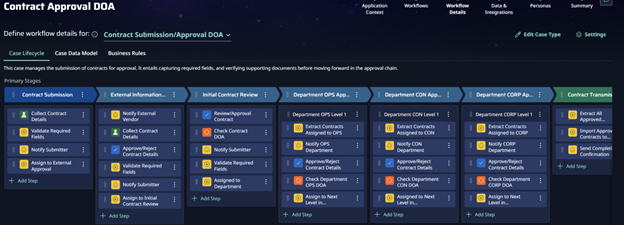

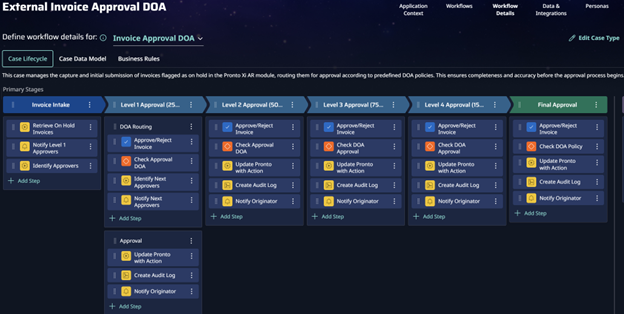
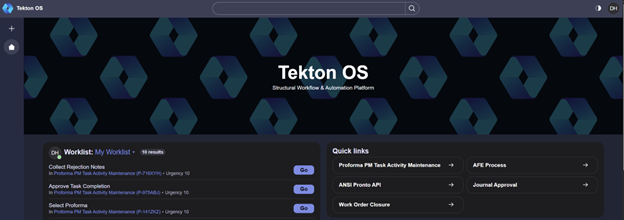
Design structured, auditable workflows that operate across your ERP without custom development or technical debt.

