
Contract Approval in Mining: Why ERP Falls Short and BPM Delivers Control

Contract Approval in Mining: Why ERP Is Not Built for the Job
Contracts in mining are not just paperwork. They shape real commitments across the business. They lock in spend, define supplier responsibilities, set service expectations, and often carry legal, environmental, and operational consequences. That is why contract approval matters so much. It is not simply about getting signatures. It is about making sure the right decisions are being made, by the right people, with the right level of control.
The problem is that, in many organizations, this process is far less controlled than it should be. Contracts often move through a maze of inboxes, shared folders, side conversations, and manual follow-ups before they are ever formally recognized by the ERP. By the time the contract shows up in the system, the important decisions have already happened somewhere else, often with limited visibility and inconsistent oversight.
That is where the real risk sits.
In mining, this becomes even harder to manage. Contract approvals rarely involve just one team. They can span sites, departments, regional leaders, procurement, finance, legal, and compliance. Everyone has a role, but the process tying those roles together is often surprisingly informal. One contract might move smoothly while another gets stuck because someone missed an email, a version was lost in a shared drive, or an approval threshold was interpreted differently by another team.
This is why so many contract processes feel messy even inside otherwise well-run organizations. It is not because people do not care. It is because the workflow itself is not being governed in a structured way.
ERP systems are excellent at recording outcomes. They are built to manage vendors, financial commitments, and procurement data with consistency and control. But they are not naturally designed to handle the full journey a contract takes before it gets there. They are not great at orchestrating multi-stage reviews, managing document versions, adapting approval paths based on value or risk, or handling the kind of flexible real-world routing that contract approval usually demands.
Trying to make the ERP do all of that usually creates a different set of problems. The system becomes more customized, more rigid, and harder to maintain. Users start working around it instead of with it. What was meant to improve control often ends up creating friction.
That is why contract approval is better understood as a workflow problem, not just a system feature. It needs structure from start to finish. It needs clear routing, clear accountability, proper document control, escalation paths when things stall, and a complete record of how decisions were made. Without that, organizations are exposed long before any transaction is entered into the ERP.
This is where a BPM layer like Tekton OS changes the picture. Instead of forcing all of that complexity into the ERP, it sits above it and governs the approval process directly. Contracts can move through a structured workflow where approvals are routed based on role, value, risk, or region. Versions can be controlled properly. Delays can trigger escalations automatically. Every decision can be tracked in one place. Then, once everything is approved, the outcome can flow cleanly into the ERP without putting more strain on the core system.
For mining organizations, that kind of structure matters. Operations are spread out. Risk is uneven. Requirements vary by site and jurisdiction. Contracts are not all equal, and the approval process cannot be one-size-fits-all. A governed workflow allows the organization to stay consistent while still handling that complexity intelligently. It reduces bottlenecks, improves audit readiness, and gives high-value or high-risk contracts the visibility they deserve.
Just as importantly, it protects the ERP from being overloaded with logic it was never meant to carry. The ERP remains the system of record. The BPM layer becomes the system that manages execution and control before the record is created. That separation is what makes the model scalable.
At the end of the day, contract approval is not just an admin step before business moves forward. It is one of the most important control points in the organization. When it is handled through disconnected tools and informal habits, risk creeps in quietly. When it is governed properly, the business gains something much more valuable than speed. It gains confidence in how decisions are made.
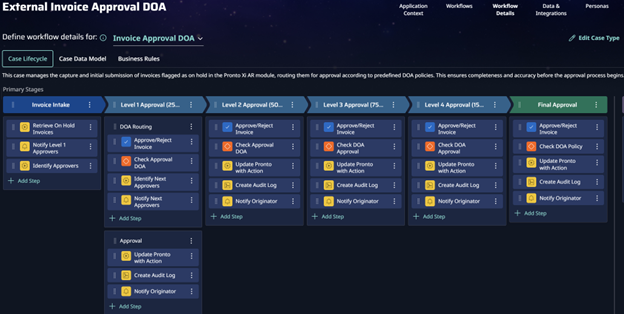

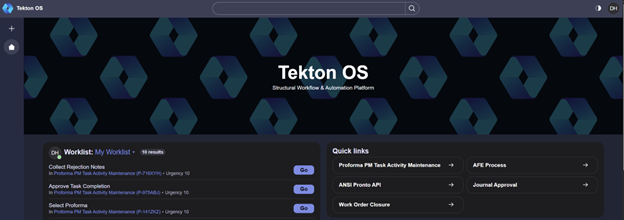

Design structured, auditable workflows that operate across your ERP without custom development or technical debt.

