
Supplier Onboarding in Mining: Why It’s a Compliance Risk

The Hidden Risk in Supplier Onboarding
In mining operations, suppliers are not just vendors, theyare extensions of the operation.
They impact:
- Safety performance
- Environmental compliance
- Operational continuity
- Financial exposure
Yet in many organizations, supplier onboarding is treated asan administrative process rather than a controlled, governed workflow.
This is where risk begins.
Why Supplier Onboarding Is More Complex Than It Appears
Onboarding a supplier in mining is not a simple registrationtask. It requires validation across multiple dimensions:
- Regulatory compliance (local and international requirements)
- ESG alignment (environmental, social, governance standards)
- Insurance and certifications
- Financial and tax documentation
- Operational qualifications and safety records
These requirements often vary by:
- Jurisdiction
- Site
- Contract type
- Risk classification
Without structured governance, this complexity becomesdifficult to manage, and even harder to audit.
Where the Process Breaks Down
In practice, supplier onboarding often occurs acrossfragmented channels;
- Email exchanges for document collection
- Shared folders for storing certifications
- Spreadsheets to track status
- Informal approvals across procurement, legal, and operations
This creates systemic issues:
- Missing or outdated documentation
- Inconsistent application of compliance standards
- Lack of visibility into onboarding status
- Delays in supplier activation
- Audit gaps and exposure
By the time a supplier is created in the ERP, the criticalchecks have already occurred, often without full control or traceability.
Why ERP Cannot Solve Supplier Onboarding Risk
ERP systems are designed to:
- Store supplier records
- Manage procurement transactions
- Enforce financial controls
They are not designed to;
- Orchestrate multi-step onboarding workflows
- Validate complex documentation requirements
- Enforce ESG and regulatory checks dynamically
- Manage cross-functional approvals
- Maintain full audit trails of onboarding decisions
Attempting to embed onboarding logic into the ERP leads to:
- Over-customization
- Rigid processes
- Increased upgrade complexity
- Poor adaptability across regions
The ERP records the supplier. It does not govern how that supplier was approved.
Supplier Onboarding as a Governance Problem
At its core, supplier onboarding is a governance andworkflow challenge.
It requires:
- Structured data and document collection
- Conditional validation based on risk and jurisdiction
- Role-based approvals across departments
- Clear escalation paths for exceptions
- Full auditability from submission to approval
Without this structure, organizations introduce risk beforeany transaction occurs.
Introducing the Intelligence Layer
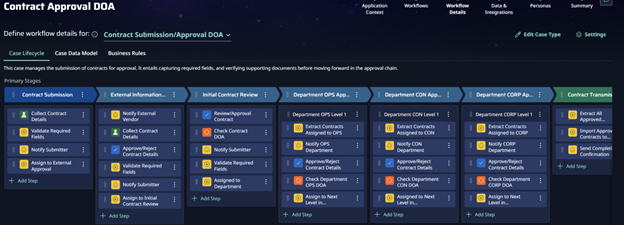
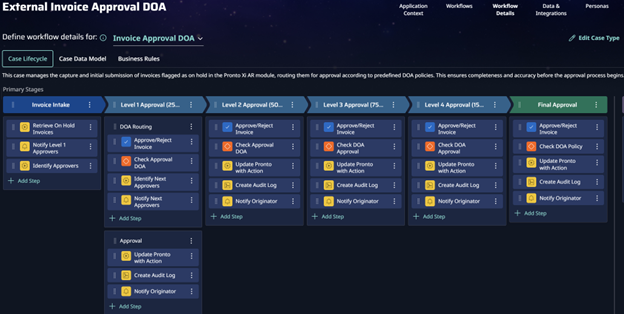
A BPM-driven intelligence layer, such as Tekton OS, addressesthis gap by governing supplier onboarding as a controlled process.
This layer:
- Structures onboarding workflows end-to-end
- Enforces documentation requirements by region and risk level
- Applies ESG and regulatory validation rules
- Routes approvals across procurement, legal, compliance, and operations
- Maintains a complete audit trail of all actions and decisions
- Integrates seamlessly with ERP systems without modifying core logic
Once onboarding is complete, the validated supplier recordflows into the ERP.
Mining-Specific Impact: Control Across Sites andJurisdictions
In mining, where operations are distributed and regulated,structured onboarding delivers critical advantages;
- Consistent compliance across sites: Standardized onboarding regardless of location
- Jurisdiction-aware validation: Local regulatory and ESG requirements embedded in workflows
- Improved audit readiness: Full traceability of documentation and approvals
- Reduced operational delays: Faster onboarding through automated routing and validation
- Stronger vendor risk management: High-risk suppliers receive appropriate scrutiny
This transforms onboarding from a bottleneck into acontrolled, scalable process.
Protecting the ERP While Strengthening Governance
By externalizing onboarding workflows into an intelligencelayer;
- ERP systems remain clean and upgradeable
- Compliance logic is managed outside core systems
- Workflow changes do not introduce technical debt
- Integration remains stable and modular
The ERP remains the system of record. The intelligence layer becomes the system of execution.
From Administrative Task to Controlled Process
When supplier onboarding is structured and governed:
- Compliance is enforced, not assumed
- Documentation is validated, not collected informally
- Accountability is clear, not distributed
- Risk is managed before supplier engagement begins
Organizations move from reactive supplier management toproactive risk control.
Closing Thought
In mining, supplier risk is operational risk.
But the true point of control is not when a supplier entersthe ERP.
It is when that supplier is approved.
Organizations that govern onboarding as a structuredworkflow, rather than an administrative task, gain visibility, reducecompliance exposure, and protect the integrity of their operations.

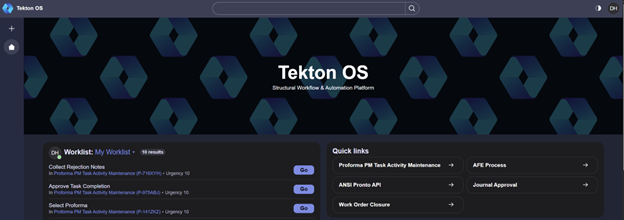
Design structured, auditable workflows that operate across your ERP without custom development or technical debt.

