
Why Approval Processes Are the Weakest Link in ERP Governance

Why Approval Processes Are the Weakest Link in ERP Governance
ERP systems are often seen as the backbone of control inside an organization. They standardize transactions, enforce financial rules, and create a reliable record of what has happened. On the surface, that gives the impression that governance is firmly in place.
But that impression can be misleading.
In most businesses, the real decisions are made before anything ever reaches the ERP. A purchase request is approved or rejected. A supplier is cleared to move forward. A maintenance job gets authorized. A contract is signed off. By the time the transaction is finally recorded in the system, the most important judgment calls have already been made somewhere else.
That is where governance is often at its weakest.
The problem is not that organizations lack approval processes. Most have plenty of them. The problem is that these processes are often handled through a patchwork of emails, spreadsheets, verbal sign-offs, and informal follow-ups between teams. They exist, but they are not truly governed. They rely on people remembering what to do, chasing the next person, and applying rules consistently in environments that are often anything but consistent.
This creates risk in ways that are easy to underestimate. Decisions get delayed because no one has a clear view of where something is sitting. Approval thresholds are interpreted differently across teams or locations. Accountability becomes blurred when multiple people are involved and no structured record exists of who made the call. When auditors ask for context, the answer is often buried in inboxes, scattered across shared drives, or dependent on someone’s memory.
None of this is unusual. In fact, it is very common, especially in large or distributed organizations where work spans sites, departments, and layers of management. The ERP may be stable, but the decision-making around it is often far less controlled than leaders assume.
This is also why ERP systems alone cannot solve the problem. Their job is to record approved transactions and maintain the integrity of financial and operational data. They are good at capturing outcomes. They are not naturally designed to manage the full path a decision takes before that outcome is created. They are not built to flex dynamically around context, route approvals across different functions, or reflect changing requirements by region, role, or risk level without introducing complexity.
When organizations try to force this kind of logic into the ERP, the result is usually the same. The system becomes more customized, more rigid, and harder to maintain. What looked like a control improvement starts creating technical and operational strain. User adoption suffers, change becomes slower, and the architecture carries more weight than it should.
At its core, approval is not just a system feature. It is a workflow. It involves people, roles, thresholds, timing, escalation paths, and context. It needs structure, visibility, and accountability from the moment a request begins to the moment a decision is made. Without that structure, governance breaks down long before the ERP ever comes into play.
That is why more organizations are starting to think differently about control. Instead of asking the ERP to manage every approval path itself, they are introducing an execution layer outside the core system. A BPM-driven platform like Tekton OS allows approval processes to be governed as workflows in their own right. That means routing can adapt based on business rules, approvals can follow the right thresholds automatically, escalations can happen on time, and every action can be tracked clearly from start to finish.
The ERP still plays a critical role. It remains the system of record. But it no longer has to carry the full burden of governing how decisions are made. That responsibility sits in a layer designed specifically for execution and control.
The value of that shift is not just technical. It changes the quality of governance itself. Decisions become more consistent across teams and locations. Delays are reduced because workflows move with more structure and less manual chasing. Accountability becomes clearer because the process is visible. Audit readiness improves because the full history exists in one place, not scattered across disconnected channels. Risk is managed earlier, before it turns into financial or operational impact.
That is the real issue many organizations miss. Control does not live in the transaction. It lives in the path that leads to the transaction. If that path is fragmented, informal, or hard to see, then governance is weaker than the ERP might suggest.
Approval processes are often treated as routine administration. In reality, they are one of the most important mechanisms of control in the business. When they are left unmanaged, they become the weakest link. When they are structured properly, they become one of the strongest.
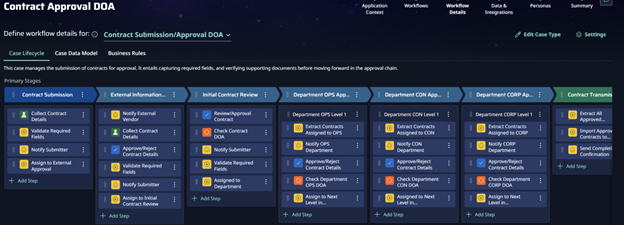

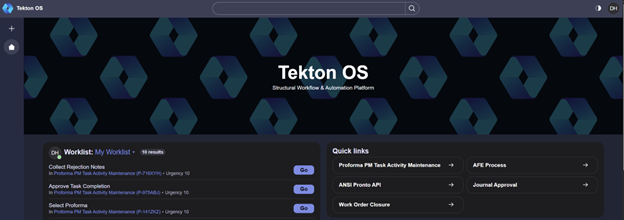

Design structured, auditable workflows that operate across your ERP without custom development or technical debt.

