
How to Reduce ERP Customization Without Losing Control

The Customization Dilemma
For most IT leaders, ERP customization begins with a reasonable goal. The business wants stronger governance, better workflows, more control, and the ability to reflect the way it actually operates. The ERP often becomes the obvious place to put that logic because it already sits at the center of the enterprise. At first, each modification feels practical. It feels like progress. Over time, however, that progress starts to accumulate into something much heavier.
What was once a clean and stable system gradually becomes burdened with exceptions, workarounds, and embedded process logic. The ERP is no longer just recording transactions. It is being asked to manage approvals, enforce operating rules, and coordinate business activity far beyond its original purpose. That is where the problem begins.
Why Customization Becomes a Problem
ERP platforms are designed to deliver consistency, stability, and transactional integrity across the organization. Their strength lies in standardization. Customization pushes against that foundation. Every time logic is added, adjusted, or embedded into the core system, the architecture becomes more complex and more difficult to manage.
At first, the impact may seem manageable. A few changes here and there rarely feel transformational. But over time, those decisions compound. Upgrades become slower and more expensive because custom code must be reviewed, tested, and often reworked. System behavior becomes harder to predict because the ERP is no longer operating as a mostly standard platform. Integration points become more fragile because each added dependency creates more opportunities for breakage. Change itself becomes harder because even small improvements carry a larger technical and operational footprint.
Eventually, the ERP stops feeling like a dependable backbone and starts behaving like a highly engineered environment that requires constant care just to maintain stability. At that point, the organization is no longer simply managing an ERP. It is managing the accumulated consequences of years of architectural compromise.
The Real Issue Is Not Control
The deeper problem is that customization is often treated as a technical necessity when it is really a symptom of an architectural mismatch. Most organizations are not customizing their ERP for the sake of customization. They are trying to solve real business problems. They need approval workflows. They need governance rules. They need compliance controls. They need processes that span departments, roles, and regions.
Those needs are legitimate. The issue is that they are being forced into a system designed primarily to process and record transactions. The more operational control is embedded inside the ERP, the more the organization binds business agility to the limitations of a transactional platform. That creates friction that does not disappear over time. It intensifies.
The real question, then, is not whether control matters. Of course it does. The more important question is where that control should live if the organization wants both flexibility and architectural integrity.
Why Reducing Customization Feels Uncomfortable
Even when teams understand the cost of ERP customization, reducing it can feel risky. That is because customization has often become the mechanism through which the business enforces control. It may be carrying approval paths, compliance steps, region-specific rules, or process-specific decision logic. Removing those customizations can sound like removing the controls themselves.
This is why many organizations stay stuck. They know the architecture is becoming difficult to maintain, but they also fear what might happen if they try to unwind it. The result is a cycle that repeats itself. Customizations are maintained because they are business critical. The cost of maintaining them continues to rise. The disruption required to rethink them feels too great. So the pattern continues, even as technical debt deepens.
A Better Approach to Control
Reducing ERP customization does not require sacrificing governance or operational discipline. It requires moving those capabilities into a better architectural layer. Instead of embedding workflow logic and approval structures inside the ERP, organizations can place them in an external execution layer built for exactly that purpose.
A BPM-driven platform such as Tekton OS changes the model. It allows organizations to orchestrate workflows across systems, enforce approval rules, adapt logic by region and role, and manage governance without overloading the ERP itself. The ERP continues to do what it does best, which is to serve as the system of record. The execution layer becomes responsible for how work moves, how decisions are made, and how rules are applied before and around the transaction.
This is not a reduction in control. It is a more disciplined way to achieve it.
How This Reduces Customization in Practice
When workflow and governance are externalized, the ERP no longer has to carry responsibilities it was never designed to handle well. Approval logic can sit outside the core system. Regional variations can be managed without fragmenting the ERP environment. Process changes can be introduced without triggering redevelopment inside the transactional platform. Integration becomes cleaner because systems interact through structured interfaces rather than deeply embedded custom dependencies.
This has two important effects. First, it reduces the amount of existing customization that the ERP must continue to support. Second, and even more importantly, it prevents new customization from accumulating in the future. The organization gains a path to simplify the core while still evolving the business around it.
Control Becomes Stronger, Not Weaker
One of the most important shifts in this model is that governance becomes more visible and more intentional. When control is embedded deep inside ERP custom logic, it can become opaque, brittle, and difficult to change. When it is managed in a dedicated execution layer, it becomes explicit. Approval paths can be standardized. Roles and decision rights can be clearly defined. Escalations can be automated. Audit trails can become more complete and easier to review. Changes to process logic can be version-controlled and managed with greater discipline.
In other words, organizations are not losing control when they reduce customization. They are making control easier to govern. That distinction matters.
The Architectural Benefit for IT Leaders
For CIOs, CTOs, and enterprise architects, the implications are significant. A cleaner ERP is easier to upgrade, easier to support, and easier to trust. Costs decline not because complexity disappears overnight, but because it stops multiplying. System stability improves because the ERP can remain closer to the standardized platform it was meant to be. At the same time, the business gains flexibility because workflows can evolve outside the constraints of ERP development cycles.
This also creates a more future-ready environment. AI, automation, and more advanced orchestration capabilities can be layered into workflows without destabilizing the core transaction system. That is a meaningful advantage for organizations that want to modernize without creating another generation of technical debt.
From Monolithic ERP Thinking to Composable Architecture
This approach reflects a larger shift in enterprise technology. The old model assumed the ERP should sit at the center of almost all process logic. The newer model is more composable. It relies on modular layers, API-driven integration, and systems that each serve a clearer purpose. In that environment, the ERP remains important, but it no longer has to carry every workflow, every exception, and every control mechanism within its own boundaries.
That change is not just technical. It is strategic. It gives organizations a way to meet business needs without continuously compromising the architecture that supports them.
Closing Thought
ERP customization is often described as unavoidable. In many cases, it is simply the result of solving the right problem in the wrong place. Organizations do need control. They do need governance. They do need workflows that reflect operational reality. But forcing all of that into the ERP creates long-term cost, fragility, and constraint.
The better answer is not less control. It is better architecture. When control is moved into a dedicated execution layer such as Tekton OS, organizations can reduce ERP customization, preserve core integrity, and still support the complexity of the real business. That is how IT leaders protect the backbone of the enterprise without limiting its ability to evolve.
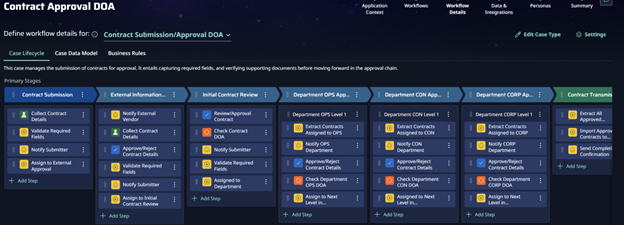

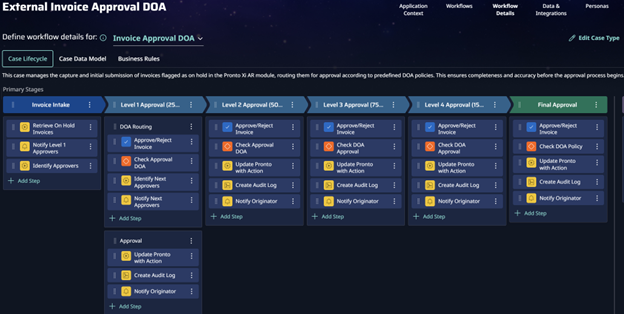
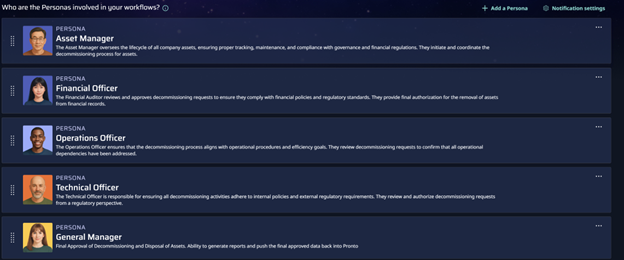
Design structured, auditable workflows that operate across your ERP without custom development or technical debt.

