
Reducing ERP Risk Through an External Intelligence Layer

Enterprise Resource Planning (ERP) systems are designed to record transactions, enforce financial controls, and provide a single source of truth. However, in distributed mining environments where operations span sites, jurisdictions, and functions, the most significant risk exposure does not sit in the transaction layer it sits in the workflow layer.
Approvals occur in email. Maintenance coordination lives in spreadsheets. Operational controls are fragmented across teams and time zones. The ERP may be stable. But governance often is not.
Where ERP Risk Actually Emerges
ERP platforms are not workflow engines. They struggle to:
- Orchestrate cross-functional approvals
- Enforce structured escalation paths
- Govern operational intent before financial impact occurs
- Maintain audit clarity across distributed sites
Risk begins before a transaction is posted. By the time the ERP records it, the operational exposure has already occurred.
The Workflow Gap in Mining Operations
In mining organizations, risk often arises in:
- Asset lifecycle approvals
- Financial Controls
- Capital expenditure governance
- Supplier onboarding and documentation
- Maintenance authorization flows
- Environmental and regulatory reporting
When these processes are executed outside structured systems, the organization creates:
- Approval ambiguity
- Audit exposure
- Inconsistent execution
- Delayed visibility
- Control breakdown across sites
The ERP cannot prevent what it cannot see.
Introducing the Intelligence Layer
An external intelligence or BPM layer, such as Tekton OS, mitigates risk by structuring execution before ERP impact. Rather than embedding workflow complexity inside the ERP, organizations introduce a governance layer that:
- Structures operational workflows before financial posting
- Governs approvals across roles and regions
- Enforces standardized escalation paths
- Maintains full audit visibility independent of ERP customization
- Integrates ERP data without modifying core logic
This approach does not replace ERP. It protects it.
Risk Mitigation Without Core System Modification
Mining companies often hesitate to change ERP environments due to stability and upgrade concerns. An intelligence layer allows organizations to introduce structured case management and governance without touching the ERP core.
This means:
- ERP upgrades remain clean
- Architecture remains modular
- Workflow changes do not create technical debt
- AI capabilities can be introduced safely
- Compliance controls can be enforced consistently
The ERP remains a system of record. The intelligence layer becomes the system of execution.
Strategic Outcome
By separating execution from record-keeping, organizations reduce operational risk while preserving ERP stability. Instead of increasing ERP complexity, mining companies create:
- A stable financial backbone
- A governed operational execution layer
- A scalable architecture prepared for AI and automation
Risk mitigation becomes architectural discipline — not customization.
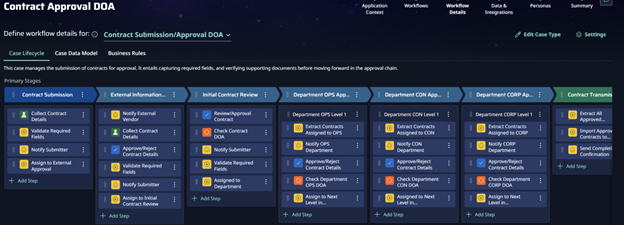

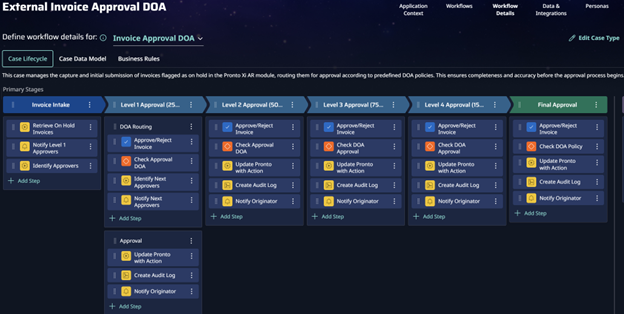
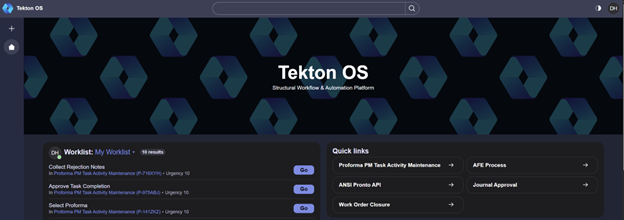
Design structured, auditable workflows that operate across your ERP without custom development or technical debt.

