
Governing Global Operations Without Overhauling Your ERP

As organizations expand across regions, compliance complexity increases exponentially.
Different jurisdictions require:
- Distinct financial controls
- Regulatory documentation
- Approval hierarchies
- Audit traceability
- Role-based governance
Yet most ERP systems were never designed to adapt dynamically to multi-jurisdiction operational nuance. The result? Governance becomes fragmented.
The Global Compliance Problem
Consider a multinational operation managing:
- Supplier onboarding in multiple countries
- Asset approvals across sites
- Financial delegations by region
- Environmental or safety compliance
- Regulatory documentation requirements
Without structured orchestration, governance often lives in:
- Email chains
- Local spreadsheets
- Informal escalation paths
- Manual policy enforcement
ERP systems record transactions but they rarely govern how work moves before that transaction occurs. This creates compliance blind spots.
Why Customizing the ERP Is Not the Answer
Organizations often attempt to solve this by:
- Embedding complex approval matrices inside the ERP
- Hardcoding regional logic
- Creating separate ERP instances
- Adding layered exception handling
Over time, this leads to:
- Upgrade complexity
- Divergent regional configurations
- Increased IT support burden
- Reduced architectural flexibility
The ERP becomes overloaded with governance logic it was never designed to manage.
Introducing an Intelligence Layer for Governance
A layered architecture changes the model. Instead of modifying ERP logic, an external intelligence layer:
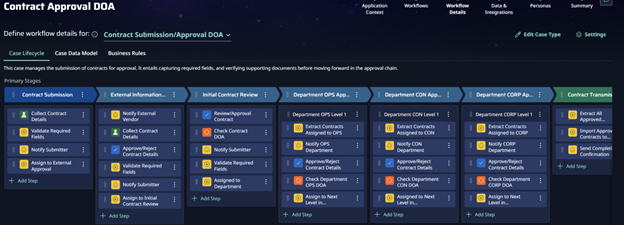
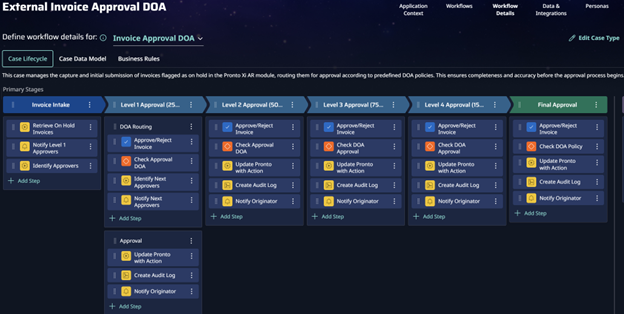
- Designs jurisdiction-specific workflows
- Applies regional compliance rules
- Enforces role-based approvals
- Maintains structured audit trails
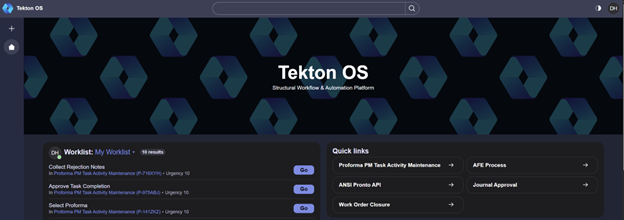
- Integrates cleanly with ERP systems
The ERP remains the financial backbone. The intelligence layer governs execution.
Dynamic Governance Across Regions
With a structured intelligence layer:
- Approval thresholds adjust by region
- Documentation requirements differ by jurisdiction
- Escalation paths adapt to organizational hierarchy
- Compliance logic is version-controlled
- Audit trails are centralized and transparent
This creates consistent governance without rigid ERP dependency.
Compliance as a System of Execution
True compliance is not a static checklist. It is a dynamic system of controlled execution. When governance is externalized from the ERP:
- Regional policy changes do not require ERP redevelopment
- New compliance requirements can be deployed rapidly
- Operational transparency improves
- Audit readiness becomes continuous rather than reactive
This reduces operational and regulatory risk.
The Strategic Advantage
Organizations that separate:
- Systems of record (ERP)
from - Systems of intelligence (execution governance)
.... gain structural flexibility. They protect core systems. They scale globally without fragmentation. And they maintain compliance discipline across distributed operations.
The Architecture That Scales
Global operations demand more than transactional accuracy.
They demand controlled execution.
An intelligence layer above ERP enables governance to evolve without destabilizing the foundation.

Design structured, auditable workflows that operate across your ERP without custom development or technical debt.

